


H
 Article
 Culture & traditions
The Old City: Neighborhoods, Alleys, and Meticulous Planning
Behind the walls lies a intricate urban fabric of alleys, markets, mosques, bathhouses, and hotels. Get to know the area so you can explore it with confidence.
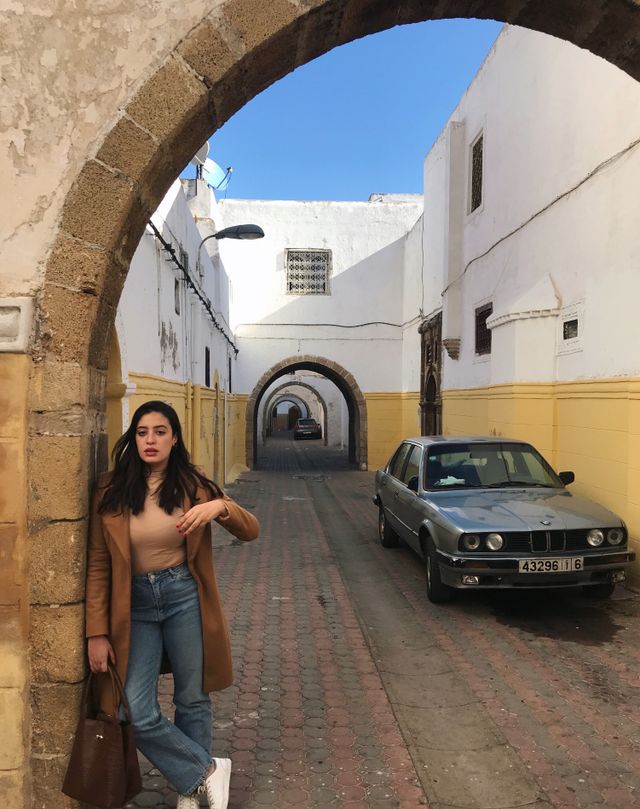
Morocco’s ancient cities—such as Fez, Marrakesh, Meknes, Tetouan, Essaouira, and Rabat—feature old neighborhoods within city walls, some of which are listed as UNESCO World Heritage Sites. These are not open-air museums but living neighborhoods inhabited by people, where women go to buy vegetables, children head to school, and porters push their carts. Those who understand how they work can explore them with greater safety and deeper enjoyment.
The General Logic of the City
The ancient cities grew organically around the central mosque, the madrasa, and the market; the main streets branched out from the city gates toward the center, and narrow alleys then branched off from them, leading to the residential neighborhoods. Functions were organized in concentric circles: the areas closest to the mosque were reserved for the cleanest and most valuable trades, such as books, perfumes, and gold, while polluting or disruptive trades—such as tanning, blacksmithing, and pottery—were located on the outskirts, kept outside the city center.
Vocabulary You Should Know
- The Path: A small residential alley, which may be dead-end and serve a group of houses.
- The Alley: A slightly wider street.
- Market: The commercial district, which is usually designated for a specific profession.
- Al-Qaisariya: A luxurious covered market that sells fabrics and gold.
- Hotel: An old inn for merchants, their goods, and their animals; many of these buildings have now been converted into workshops, warehouses, and museums.
- School: An old religious school featuring student dormitories and an ornate courtyard.
- The bathroom: A public bathhouse in every neighborhood, along with a communal kitchen, a mosque, and a water fountain.
- Oven: The neighborhood oven where families bake their dough; as lunchtime approaches, you can tell by the way the boys are moving the baking trays.
- Watering: An ornate public fountain.
A single neighborhood as a unit
According to the traditional layout, the neighborhood has everything it needs: a mosque, a bakery, a public bath, a water fountain, a school, and small shops. Its residents share strong neighborly bonds, and families have often known one another for generations. This makes visitors feel like guests in a communal home; they should not raise their voices in the residential alleys or walk through private paths without a valid reason.
How do you get around?
- Phone Maps: It only works partially because of the winding alleys and high walls, so download the map offline and rely on the landmarks.
- Start your day: Avoid the side alleys after sunset on your first visit.
- Key Market Trends: And turning back is easier than setting out on the trails.
- Official Guide: To explore complex neighborhoods such as Fez el-Bali, it is helpful to hire a certified guide at a predetermined rate.
- Make way: The word «balak» means “make way”; porters, those carrying loads, or those driving animals use it to signal others to step aside immediately.
- Shoes: Comfortable, because the ground is uneven and sometimes wet.
Dealing with Informal Guides
A young man might offer to help you find your way and then ask for money, or lead you to a shop from which he receives a commission. The best course of action is to politely decline with a «No, thank you» and a smile, and continue walking confidently. If you really need help, ask a shopkeeper, a woman, or a police officer. This advice doesn’t mean that people are bad; rather, the influx of tourists has created a parallel economy.
Convenient Times
- Early Morning: Quiet and ideal for photography and observing everyday life.
- Afternoon: Markets are picking up.
- Friday: Many stores close during prayer times, and traffic in Fez slows down.
- Ramadan: Times change, and the markets get crowded after afternoon prayers.
Heritage Preservation Issues
Historic cities face challenges related to restoration, housing, overcrowding, and the conversion of some homes into tourist attractions. Efforts are being made to restore landmarks, and organizations are working to educate residents about building maintenance. Visitors can play a simple role: buy from local artisans, stay in homes that respect the neighbors, don’t litter, and walk quietly.
Quick Tips
- Carry a small amount of dirhams for daily expenses.
- Write down the name of your door or the place where you're staying.
- Ask for directions twice from different people.
- Use the clean public restrooms in cafes.
- Do not enter a place marked as "private" or a mosque where non-Muslims are not permitted.
An Example of a Day in an Ancient City
Your morning begins as you enter through the main gate onto the largest shopping street; you pass through the spice market, then arrive at an old mosque or school, where you can admire its door and courtyard if it’s open to visitors. At noon, you’ll head to a rooftop restaurant or café to relax, then return in the afternoon to stroll through the leather, copper, and fabric markets, where you’ll see how different trades cluster in neighboring markets. The tour concludes at sunset in a square or on a rooftop overlooking the city.
It's best not to cram more than three or four sights into a single day, because the crowds and long walks can be exhausting. And avoid rushed tours that leave you seeing everything but understanding nothing.
What should you avoid doing?
- Do not enter homes or workshops without an invitation or permission.
- Do not photograph women or children without their consent.
- Don't follow anyone who promises you a secret location or a special price.
- Don't carry valuable items in plain sight, and keep an eye on your pockets in crowded places.
- Don't assume that everyone who talks to you is trying to sell you something; many people just enjoy a friendly chat.
The Most Famous Historic Cities
- Fes el-Bali: It is one of the largest inhabited ancient cities in the world; its terrain is complex, and it takes at least two days to explore.
- Marrakech: A vibrant red city centered around Jemaa el-Fna Square and its markets.
- Meknes: It's less crowded, and it has massive gates and a long wall.
- Tetouan: A white city with an Andalusian character and a more peaceful atmosphere.
- Essaouira: A fortified city on the ocean with relatively straight streets; it is the easiest of the ancient cities for beginners.
- Rabat: An ancient city known as Al-Oudaya, with its blue alleys and less crowded streets.
Every city calls for its own unique rhythm of walking and contemplation, so don't apply a one-size-fits-all approach.
Summary
The Old City is an open book for those who take their time. Put the map aside every now and then, walk aimlessly for the first hour, and then return to the well-trodden path. You’ll discover that getting lost is part of the experience—as long as you have something to guide you back to the entrance.
 Route · Culture & traditions
Two-Day Itinerary: Agadir and Taroudant
Two-Day Itinerary: Agadir and Taroudant, four customizable stops with a practical itinerary and tips on transportation, safety, and budgeting.
Route · Culture & traditions
Two-Day Itinerary: Fez, Sefrou, and Al-Bahalil
Two-Day Itinerary: Fez, Sefrou, and El Bahalil—four adjustable stops with a practical itinerary and notes on transportation, safety, and budget.
Route · Culture & traditions
Two-Day Itinerary: Safi and Essaouira on the Atlantic Coast
A Two-Day Itinerary: Safi and Essaouira on the Atlantic Coast, four adjustable stops with a practical itinerary and notes on transportation, safety, and budget.
Article · Culture & traditions
Ancient Moroccan Doors: Ornaments That Tell the Stories of Neighborhoods
The wooden and metal doors bear traces of local craftsmanship and multiple restoration phases. An interpretive panel with tips and information for visitors.
Article · Culture & traditions
Weekly and Seasonal Markets: Where Trade and Social Life Meet
In many regions, weekly markets serve as places for shopping, socializing, and exchanging news. An explanatory article with tips and information for visitors.
Article · Culture & traditions
Olive Oil in Northern Morocco: The Harvest Season and Family Work
Olive trees are a common sight in the agricultural landscape of many northern regions. An explanatory article with tips and information for visitors.
Article · Culture & traditions
Tadlak: The Beauty of Polished Walls in Moroccan Architecture
Tadlak is a traditional method of treating surfaces with lime and gradual polishing. An explanatory text with tips and information for visitors.
Article · Culture & traditions
Moroccan Rugs: Interpreting Patterns and Fibers Without Generalizing
Handmade carpets come in a variety of styles and cannot be defined by a single color or pattern. An explanatory article with tips and information for visitors.
H
Did you find this helpful?
Did you find what you were looking for? Rate this content and tell us how to make it more accurate and useful for you and other travelers.
Did you find this helpful?
Rate the content and tell us how to make it better.